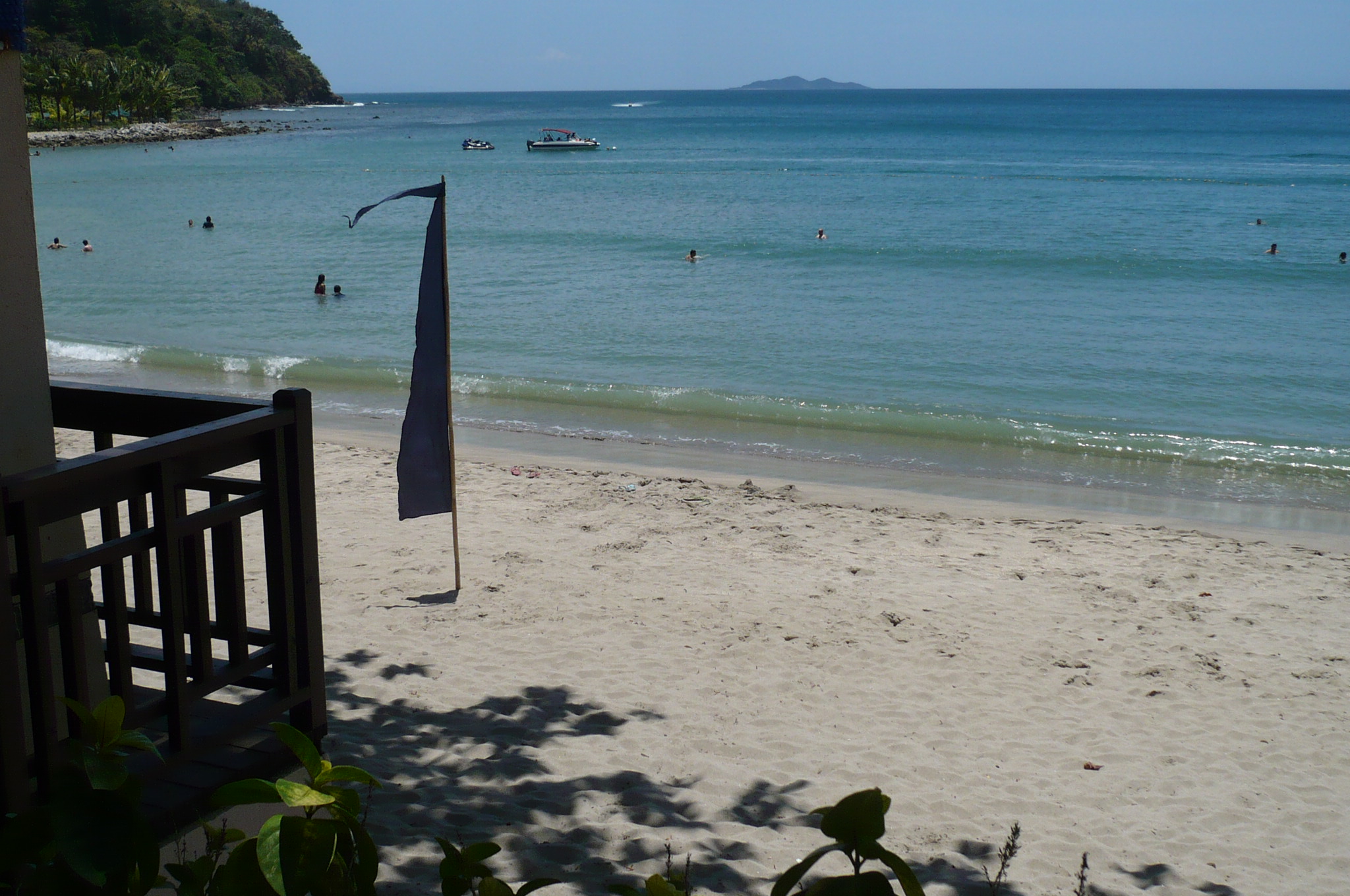
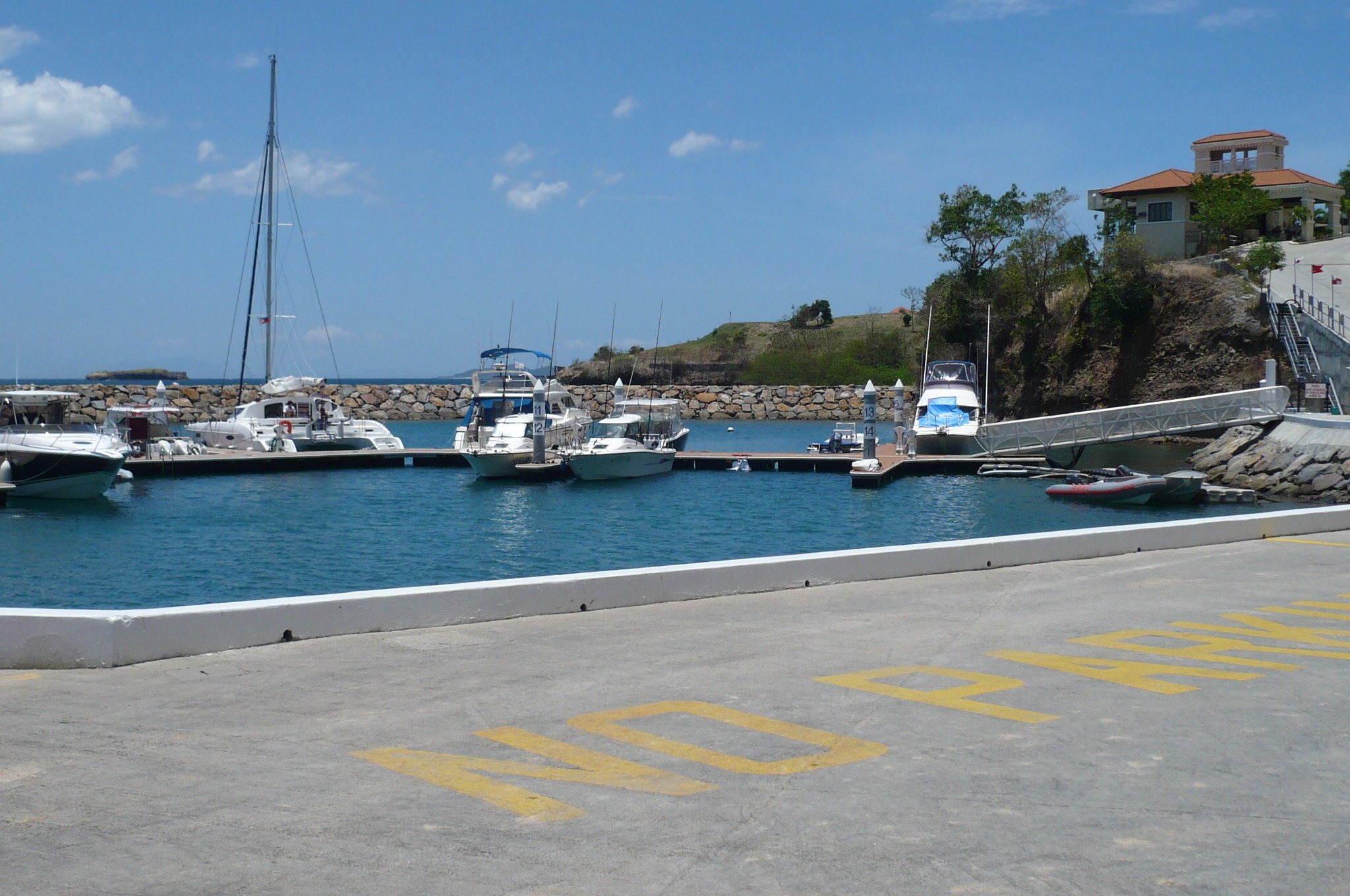
One of my favorite developments in the office that I'm working for. A very nice experience that Punta Fuego can offer.
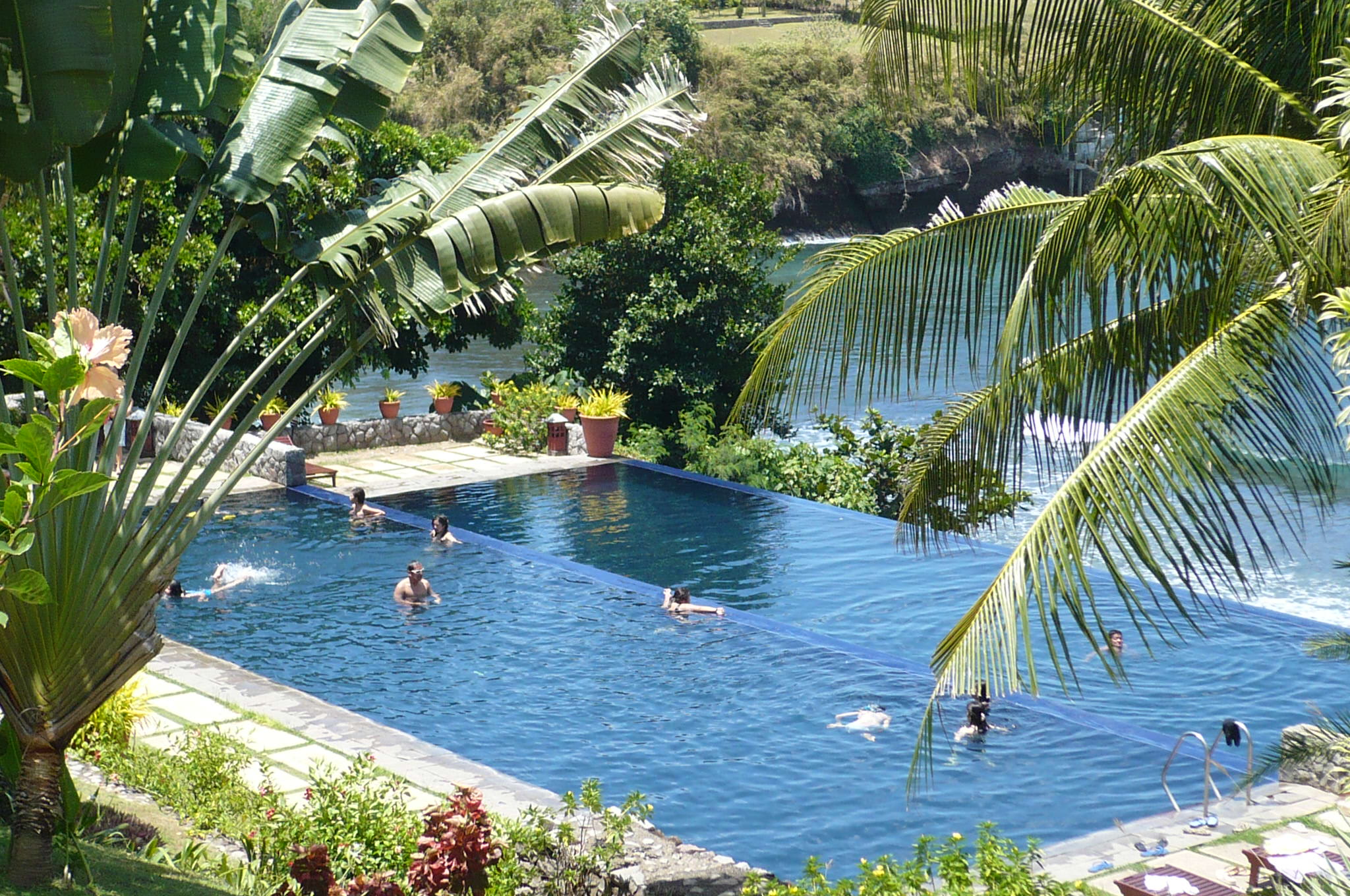
One of the first Infinity pools created by this beautiful leisure community.
The BMW 5 Series is a mid-size / executive car manufactured by BMW since 1972. The car, now in its fifth generation, is sold in sedan and touring body styles.
On January 29, 2008, the 5 millionth 5 series, a 530d sedan in Carbon Black Metallic, was manufactured.[citation needed]
Contents[hide] |
[edit] History

The 5 Series got its name by being the fifth of the "new series" cars after the V-8 and Isetta era. The preceding models were the 700, the "New Class", the "New Six" 2500/2800/Bavaria and the CS. The 5 Series was intended to replace the older New Six sedans.
The body was styled by Marcello Gandini, based on the Bertone 1970 BMW Garmisch 2002ti Geneva show car. Gandini also did the Fiat 132 and Alfa Romeo Alfetta, two other cars that have a similar design.
There have been five generations of the 5 Series to date. To differentiate between them, they are referred to by their unique chassis numbers (EXX).
The 5 Series began the BMW tradition of being named with a three-digit number. The first digit (5 in this case) represents the model, and the following two digits (usually) represent the size of the engine in decilitres, which is the main distinguishing difference. Additional letters or words may be added to the end of the three-digit number to define the fuel type (petrol or diesel), engine or transmission details, and the body style. The 'i' originally stood for (fuel) 'injection'.
[edit] E12 (1972-1981)
 |
|
| Production | 1972-1981 |
|---|---|
| Body style(s) | 4-door sedan |
| Layout | FR layout |
| Platform | BMW E12 |
| Engine(s) | 1.8 L M118 I4 1.8 L M42 I4 1.8 L M10B18 I4 2.0 L M17 I4, 115 hp (86 kW) 2.0 L M64 fuel injected I4, 125 hp (93 kW) 2.5 L I6 2.8 L I6 3.0 L I6, 176 hp (131 kW) 3.5 L I6, 218 hp (163 kW) 3.0 L I6, 176 hp (131 kW) 2.8 L I6, 169 hp (126 kW) |
- See also BMW E12 for more information
The BMW E12 was the first 5 Series BMW made. The following models were produced in this series:
- Non-US
- 1974 518 - 1.8 L M118 I4
- 1976 518 - 1.8 L M42 I4
- 1980 518 - 1.8 L M10B18 I4
- 1972 520 - 2.0 L M17 I4, 115 hp (86 kW; 117 PS)
- 1972 520i - 2.0 L M64 fuel injected I4, 125 hp (93 kW; 127 PS)
- 1973 525i - 2.5 L I6
- 1975 528i - 2.8 L I6
- 1975 530i - 3.0 L I6, 176 hp (131 kW; 178 PS)
- 1976 530 Motorsport Limited Edition - 3.0 L I6, 200 hp (149 kW; 203 PS)
- 1979 M535i - 3.5 L I6, 218 hp (163 kW; 221 PS)
- US
- 1975-1978 530i - 3.0 L I6, 176 hp (131 kW; 178 PS)
- 1979-1981 528i - 2.8 L I6, 169 hp (126 kW; 171 PS)
The 1.8 L engines and the 2.0 L fuel injected engines were exclusive to Germany until the 1980s. The South African models were 525i, 528i and 530i.
[edit] E28 (1982-1988)
 |
|
| Production | 1982-1988 |
|---|---|
| Body style(s) | 4-door sedan |
| Layout | FR layout |
| Platform | BMW E28 |
| Engine(s) | 2.7L 127 hp (95 kW) I6 3.4L 182 hp (136 kW) I6 |
| Transmission(s) | 4-speed automatic 5-speed manual |
| Wheelbase | 2,624 mm (103.3 in) |
| Length | 4,801 mm (189.0 in) |
| Width | 1,699 mm (66.9 in) |
| Height | 1,415 mm (55.7 in) |
- See also BMW E28 for more information
The BMW E28 was the second BMW 5 Series, a stylistic evolution of the E12.
The following models were sold in Europe:
- 518/518i- 1.8 L M10B18
- 520i - 2.0 L M20B20 I6
- 524d - 2.4 L M21 diesel I6
- 524td - 2.4 L M21 turbodiesel I6
- 525i - 2.5 L M30B25 I6
- 525e - 2.7 L M20B27 I6
- 528i - 2.8 L M30B28 I6
- 530i - 3.0 L M30B30 I6
- 535i/M535i - 3.4 L M30B34 I6
- M5 - M88 I6, 286 PS (210 kW; 282 hp)
- High performance 5 Series - 24-valve DOHC, I6, six throttle bodies, Bosch Motronic integrated fuel injection. At its launch in 1984, the European specification E28 M5 was the fastest production sedan in the world.
The following models were sold in America:
- 524td - 2.4 L M21 turbodiesel I6, 114 hp (85 kW; 116 PS)
- 528e - 2.7 L M20B27 I6, 121 hp (90 kW; 123 PS)
- Designed for fuel efficiency
- High revving power
- A 533i bored to produce more torque and equal power
- A 535i with a sport suspension interior modifications
- High performance 5 Series - 24 valve DOHC, I6, six throttle bodies, Bosch Motronic integrated fuel injection, available only in black in the US.
Visible changes to this model included revised headlights, Thicker rubber bumper surrounds and large rectangular taillights. The shape was more box shaped than rounded at the rear.
[edit] E34 (1988-1996)
 |
|
| Production | 1989-1996 |
|---|---|
| Body style(s) | 4-door sedan 4-door station wagon |
| Layout | FR layout |
| Platform | BMW E34 |
| Engine(s) | 1.8 L M40B18 I4 1.8 L M43B18 I4 1.8 L M43B18 I4 2.0 L M20B20 I6 2.0 L M20B20 I6 2.0 L M50B20 I6 2.5 L M20B25 I6 2.5 L M50B25 I6 3.0 L M60B30 V8 3.5 L M30B35 I6 4.0 L M60B40 V8 2.5 L M20B25 I6 3.5 L M30B35 I6 3.6 L S38B36 I6, 310 hp 2.5 L M50B25 I6 3.0 L M60B30 V8 4.0 L M60B40 V8 |
| Transmission(s) | 4-speed automatic 5-speed manual 5-speed automatic 6-speed manual |
| Wheelbase | 2,761 mm (108.7 in) |
| Length | 4,719 mm (185.8 in) |
| Width | 1,750 mm (68.9 in) |
| Height | 1,412 mm (55.6 in) 1,417 mm (55.8 in) |
- See also BMW E34 for more information
The third generation 5 Series earned awards for safety and reliability and was considered one of the most elegant shapes of its time.
Models:
- Non-US
- 1989–1994 BMW 518i - 1.8 L M40B18 I4 115 hp (86 kW; 117 PS)
- 1994–1996 BMW 518i - 1.8 L M43B18 I4 115 hp (86 kW; 117 PS)
- 1995–1996 BMW 518g (CNG) Touring - 1.8 L M43B18 I4
- 1987–1990 BMW 520i - 2.0 L M20B20 I6 129 hp (96 kW; 131 PS)
- 1987–1990 BMW 520i ECE - 2.0 L M20B20 I6 129 hp (96 kW; 131 PS) higher compression than non ECE
- 1990–1996 BMW 520i - 2.0 L M50B20 I6 150 hp (112 kW; 152 PS)
- 1988-1991 BMW 524td - 2.4 L M21 I6 diesel
- 1993-1995 BMW 525td - 2.5 L M51D25 UL I6 115 hp (86 kW; 117 PS) diesel
- 1991-1995 BMW 525tds - 2.5 L M51D25 OL I6 143 hp (107 kW; 145 PS) diesel
- 1987–1990 BMW 525i - 2.5 L M20B25 I6 170 hp (127 kW; 172 PS)
- 1990–1996 BMW 525i - 2.5 L M50B25 I6 192 hp (143 kW; 195 PS)
- 1990–1996 BMW 525iX - 2.5 L M50B25 I6 192 hp (143 kW; 195 PS) Very rare
- 1988–1990 BMW 530i - 3.0 L M30B30 I6 185 hp (138 kW; 188 PS)
- 1992–1996 BMW 530i - 3.0 L M60B30 V8 218 hp (163 kW; 221 PS)
- 1987–1993 BMW 535i - 3.5 L M30B35 I6 211 hp (157 kW; 214 PS)
- 1992–1996 BMW 540i - 4.0 L M60B40 V8 286 hp (213 kW; 290 PS)
- 1990–1993 BMW M5 - 3.6 L S38B36 I6, 315 hp (235 kW; 319 PS)
- 1994–1996 BMW M5 - 3.8 L S38B38 I6, 340 hp (254 kW; 345 PS)
- US
[edit] E39 (1995-2003)
 |
|
| Production | 1995-2003 |
|---|---|
| Body style(s) | 4-door sedan 4-door station wagon |
| Layout | FR layout |
| Platform | BMW E39 |
| Engine(s) | * 2.8 L M52B28 I6, 193 hp (144 kW) 4.4 L M62B44 V8, 282 hp (213 kW) 2.5 L M54B25 I6, 184 hp (137 kW) 3.0 L M54B30 I6, 225 hp (172 kW) 4.9 L S62B50 V8, 400 hp (294 kW) |
| Transmission(s) | 5-speed manual 4-speed automatic 5-speed automatic 6-speed manual |
| Wheelbase | 2,830 mm (111.4 in) |
| Length | 4,775 mm (188.0 in) (sedan) 4,806 mm (189.2 in) (wagon) |
| Width | 1,801 mm (70.9 in) |
| Height | 1,435 mm (56.5 in) (sedan) 1,415 mm (55.7 in) (2000-03 540i sedan) 1,440 mm (56.7 in) (1997-99 wagon) 1,417 mm (55.8 in) (1997-99 540i sedan) 1,486 mm (58.5 in) (2000-03 wagon) |
| Related | BMW X5 BMW M5 |
- See also BMW E39 for more information
The BMW E39 was one of BMW's most successful cars, with several different models. These included:
- 1996–2000 520i - 2.0 L M52B20 I6, 110 kW (150 PS; 148 hp)
- 2000–2003 520i - 2.2 L M54B22 I6, 127 kW (173 PS; 170 hp)
- 1996–2000 523i - 2.5 L M52B25 I6, 125 kW (170 PS; 168 hp)
- 2000–2003 525i - 2.5 L M54B25 I6, 137 kW (186 PS; 184 hp)
- 1996–1999 528i - 2.8 L M52B28 I6, 144 kW (196 PS; 193 hp)
- 1999–2000 528i - 2.8 L M52B28 TU I6, 144 kW (196 PS; 193 hp)
- 2000–2003 530i - 3.0 L M54B30 I6, 172 kW (234 PS; 231 hp)
- 1996–2003 535i - 3.5 L M62B35 V8, 183 kW (249 PS; 245 hp)
- 1996–1998 540i - 4.4 L M62B44 V8, 213 kW (290 PS; 286 hp)
- 1998–2003 540i - 4.4 L M62TUB44 V8, 216 kW (294 PS; 290 hp)
- 1998–2003 M5 - 4.9 L S62 V8, 298 kW (405 PS; 400 hp)
- 2000-2003 520d - 2.0 L M47D20 diesel I4 100 kW (136 PS; 134 hp)
- 2000-2003 525d - 2.5 L M57D25 diesel I6120 kW
- 1997-2000 525td - 2.5 L M51D25TU UL diesel I6 85& kW
- 1996-2000 525tds - 2.5 L M51D25TU OL diesel I6 105 kW (143 PS; 141 hp)
- 1998-2000 530d - 3.0 L M57D30 diesel I6 135 kW (184 PS; 181 hp)
- 2000-2003 530d - 3.0 L M57D30 diesel I6 142 kW (193 PS; 190 hp)
The BMW M57 type Engine is a straight-6 Diesel produced from 1998. It won the "2.5-3 L" category of the International Engine of the Year award for 1999 through 2002. The updated twin-turbocharger version won that same award in 2005. The 2.5 L (2497 cc/152 in³) M57D25 was the smallest member of the family. It produced 120 kW (161 hp) at 4000 rpm and 350 N·m (258 lb·ft) at 2000-2500 rpm with a 4750 rpm redline. Application: 525D

In US:
- 1997–2000 528i - 2.8 L M52B28 I6, 193 hp (144 kW; 196 PS)
- 1997–1998 540i - 4.4 L M62B44 V8, 282 hp (210 kW; 286 PS)
- 2001–2003 525i - 2.5 L M54B25 I6, 184 hp (137 kW; 187 PS)
- 2001–2003 530i - 3.0 L M54B30 I6, 225 hp (168 kW; 228 PS)
- 1998–2003 540i - 4.4 L M62TUB44 V8, 282 hp (210 kW; 286 PS)
- 2000–2003 M5 - 5.0 L S62 V8, 394 hp (294 kW; 399 PS)
This car has been widely praised in all aspects; many say it is the best BMW in the world.[citation needed] Consumer Reports gave the 2001 530i its highest car rating ever. The diesel engines available in the European models provide great torque and smoothness with better economy. The M5 has been called "the ultimate in discreet speed" with 369 lbf·ft (500 N·m) of torque and a 0–60 mph time of 4.8 s. The only downside was its smallish cabin and tiny trunk space of 11.1 ft³ (314 L).
The very first E39 BMW 5 Series rolled off the assembly line in February, 1995[1].
[edit] E60/E61 (2003-present)
 |
|
| Production | 2003-present |
|---|---|
| Body style(s) | 4-door sedan 4-door station wagon |
| Layout | Front engine, rear-wheel drive / Four-wheel drive |
| Platform | BMW E60 |
| Engine(s) | 2.0L 170 hp I4 3.0L 230 hp I6 3.0L Twin Turbo 300 hp I6 4.8L 360 hp V8 2.5L 184 hp I6 4.4L 325 hp V8 5.0L 500 hp V10 |
| Transmission(s) | 6-speed manual 6-speed automatic 7-speed SMG |
| Wheelbase | 2,888 mm (113.7 in) (sedan) 2,885 mm (113.6 in) (wagon) |
| Length | 4,841–4,844 mm (190.6–190.7 in) (2004-06 sedan) 4,854 mm (191.1 in) (2007-present sedan) 4,856 mm (191.2 in) (wagon) |
| Width | 1,847 mm (72.7 in) |
| Height | 1,468–1,481 mm (57.8–58.3 in) (2007-present sedan) 1,470 mm (57.9 in) (2004-06 sedan) 1,491 mm (58.7 in) (wagon) |
| Related | BMW X5 BMW M5 |
- See also BMW E60 for more information
The BMW E60 is the current BMW 5 Series. Its Chris Bangle-designed styling and many of its advanced features received mixed reviews. The E60 represents a significant step forward in technology over previous models. With complete electronic control over all aspects of the vehicle from the suspension, to brightness of interior lights, to different temperature zones within the cabin. The vehicle is also equipped with an array of safety features from adaptive headlights to Hill start assist, and is also equipped with a Trailer Stability Program to aid when towing a large trailer or caravan. Other major options include Active Cruise Control and Active Steering.
It is available in both sedan and wagon versions and has the following models: [2]
- 2006- 520d - 2.0 L (1995 cc) diesel I4, 120 kW (163 PS; 161 hp)
- 2003-2005 520i - 2.2 L (2171 cc) I6, 125 kW (170 PS; 168 hp)
- 2007- 520i - 2.0 L (1995 cc) I4, 125 kW (170 PS; 168 hp)
- 2004-2007 523i - 2.5 L (2497 cc) I6, 130 kW (177 PS; 174 hp)
- 2007- 523i - 2.5 L (2497 cc) I6, 140 kW (190 PS; 188 hp)
- 2004-2007 525i/xi - 2.5 L (2497 cc) I6, 160 kW (218 PS; 215 hp)
- 2007- 525i/xi - 3.0 L (2996 cc) I6, 160 kW (218 PS; 215 hp)
- 2004-2007 530i/xi - 3.0 L (2979 cc) I6, 190 kW (258 PS; 255 hp)
- 2004-2007 530d/xd - 3.0 L (2993 cc) diesel I6, 175 kW (238 PS; 235 hp) and 500 N·m (370 ft·lbf)
- 2004- 535d - 3.0 L (2993 cc) diesel I6, 200 kW (272 PS; 268 hp) and 413 ft·lbf (560 N·m) (compression ratio: 16.5:1)
- 2006- M5 - 5.0 L S85 V10, 373 kW (507 PS; 500 hp)

In US:
- 2004-2005 525i - 2.5 L M54B25 I6, 184 hp (137 kW; 187 PS)
- 2004-2005 530i - 3.0 L M54B30 I6, 225 hp (168 kW; 228 PS)
- 2004-2005 545i - 4.4 L N62B44 V8, 325 hp (242 kW; 330 PS)
- 2006-2007 525i/xi - 3.0 L N52B30 I6, 215 hp (160 kW; 218 PS)
- 2006-2007 530i/xi - 3.0 L N52B30 I6, 255 hp (190 kW; 259 PS)
- 2006- 550i - 4.8 L N62B48 V8, 360 hp (268 kW; 365 PS)
- 2008- 528i/xi - 3.0 L N52B30 I6, 230 hp (172 kW; 233 PS)
- 2008- 535i/xi - 3.0 L N54B30 twin-turbo I6, 300 hp (224 kW; 304 PS)
- 2006- M5 - 5.0 L S85 V10, 373 kW (507 PS; 500 hp)
Four-wheel drive is now an option on the 5 Series for the first time since the E34 in 1996. The xDrive system is shared with the X3 and X5. 2006-2008 Models, following the company's naming scheme, will be the 525xi, 528xi, 530xi and 535xi. 2009 onwards will be badged 528i xDrive and 535i xDrive.
[edit] Crash scores
| EuroNCAP adult occupant[1]: |   |
| EuroNCAP child occupant: | |
| EuroNCAP pedestrian: | |
| IIHS overall frontal offset score[2]: | Good |
| IIHS overall side crash test score[3]: | Marginal |
| Frontal Driver: | |
| Frontal Passenger: | |
| Side Driver: | |
| Side Rear Passenger: | |
| Rollover: | |
[edit] Refreshed 5-Series update (January 2007)
The updated E60/E61 5-Series was unveiled on January 8, 2007. Updates include new front and rear bumpers, restyled front headlights and restyled taillights with LED technology. A refreshed interior is also presented featuring the new shifter from the new X5, and the addition of the new BMW Drive-By-Wire system.
The 2008 model, of the 520i, has a new engine: a 2.0 litres 4 cylinders instead of the R6 2.2 litres. High compression and new piezo direct injection technology keeps the performance on 170 bhp (127 kW; 172 PS) / 210 N·m (150 lb·ft), but betters the fuel economy. BMW is considering bringing its diesel powered models to the United States in late 2008. A Lane Departure Warning System was added and the Active Cruise Control system added a "Stop and Go" feature which can bring the vehicle to a stop automatically and resume again.[5]. Another new option was BMW Night Vision
BMW also launched a new M5 Touring into their range, but this will not be introduced in the USA.
[edit] 5-Series Gran Turismo
In May 2009, BMW released the official pictures of its production model 5-Series Gran Turismo, which is considered a coupé-like crossover vehicle or station wagon - a blend of different typical body styles. BMW advertises the new 5-Series GT as "The First of its Kind". The 5-Series GT will be powered by a twin-turbo L6 producing 306 hp and a twin-turbo V8 producing 400 hp; the latter will give the car a 0-60 mph time of 5.4 seconds. The car will receive BMW's new 8-speed serial automatic transmission, along with a new Brake Energy Regeneration system. [6]
[edit] Awards
The E39 5 Series was on Car and Driver magazine's annual Ten Best list for six years straight, from its introduction in 1997 through 2002. It was also Motor Trend's Import Car of the Year for 1997 and What Car? Executive Car of the Year 1997 through 2002. The E60 was named "Best New Luxury / Prestige Car" in the 2006 Canadian Car of the Year awards. Active Seat [3] continuous passive motion seating comfort technology recognized as one of the Best Inventions of 1998 by Popular Science magazine. Consumer Reports found the E39 5 series their best car tested in 2001-2002.
I consider the E-34 body of the 5 series as the sexiest and sturdiest of them all. I could specifically attest and prove the worth of this beautiful German creation. Leading in technological know-how that Japanese carmakers are starting to adapt only now. The experience, ride, performance, image that it represents truly satisfies. It is indeed sheer driving pleasure and the ultimate driving machine.
THE POLICE
The Police were an English rock trio, from London, England, formed originally in 1977. The trio consisted of Sting (lead vocals, bass guitar), Andy Summers (guitar, vocals) and Stewart Copeland (drums, vocals, percussion). The band became globally popular in the late 1970s and are generally regarded as one of the first New Wave groups to achieve mainstream success, playing a style of rock that was influenced by jazz, punk and reggae music. Their 1983 album, Synchronicity, was number one in the UK and the US and sold over 8,000,000 copies in the US. The band broke up in 1984, but reunited in early 2007 for a one-off world tour lasting until August 2008, in celebration of the 30th anniversary of their hit single "Roxanne" and also, to a lesser extent, that of their formation as a group. The Police have sold more than 50 million albums worldwide, and became the world's highest-earning musicians in 2008, thanks to their reunion tour. [1] Rolling Stone ranked The Police number 70 on their list of the 100 Greatest Artists of All Time.[2]
Contents[hide] |
[edit] Career
[edit] Formation
The Police were founded by American-born drummer Stewart Copeland in early 1977. After the demise of his progressive rock band Curved Air, Copeland was anxious to form a new three-piece group and join the burgeoning London punk scene. Singer-bassist Sting and guitarist Henry Padovani began rehearsing with Copeland in January 1977, and they recorded their first Police single, "Fall Out"/"Nothing Achieving," the following month. In March and April, the threesome toured as a support act for Cherry Vanilla as well as Wayne County & the Electric Chairs.[3][4]
In May, ex-Gong musician Mike Howlett invited Sting and former Eric Burdon and the Animals guitarist Andy Summers to form Strontium 90 with him, as a project band for a Gong reunion. The drummer Howlett had in mind for this band, Chris Cutler, was unavailable to play, so Sting brought along Stewart Copeland. Strontium 90 recorded several demo tracks at Virtual Earth Studios, and then performed at a Gong reunion concert in Paris on May 28, 1977. An album with some of these studio and live tracks (with the first recorded version of "Every Little Thing She Does Is Magic") was released 20 years later in 1997 under the name Strontium 90: Police Academy. The foursome also performed at a London club as "The Elevators" in July 1977.[5]
In July 1977, Copeland, Sting, Padovani, and Summers began performing as a four-piece version of the Police. Padovani's relatively limited ability as a guitarist curtailed his tenure with the band. Soon after an aborted recording session with producer John Cale on August 10, Padovani left the band and Summers took over sole guitar duties. This lineup of Copeland, Sting, and Summers would endure for the rest of Police history.[6]
Sting proved a capable songwriter. He had spent time as a secondary school English teacher, and his lyrics are noted for their literary awareness and verbal agility. Material in the later album Ghost in the Machine was inspired by the writings of Arthur Koestler, and songs on Synchronicity by the writings of Carl Jung. "Tea in the Sahara" on the latter album showed interest in the work of author Paul Bowles.
The Police, along with The Clash, were among the first mainstream white bands to adopt reggae as a predominant musical form, and to score major international hits with reggae-styled material. Although ska and reggae were already popular in the United Kingdom, the style was little known in the United States or other countries. Prior to the emergence of the Police, only a handful of reggae songs — such as Eric Clapton's 1974 cover rendition of Bob Marley's "I Shot the Sheriff" or Paul Simon's "Mother and Child Reunion" — had enjoyed much chart success.
The bleached-blonde hair that would become a trademark of the band was a lucky accident, originating in February 1978. The band, desperate for money, was asked to do a commercial for Wrigley's Spearmint chewing gum on the condition that they dye their hair blonde.[7]
[edit] Recording contract
For the Police, their first album, Outlandos d'Amour was a hardship, working on a small budget, with no manager or record deal. Stewart Copeland's older brother Miles Copeland III heard "Roxanne" for the first time and immediately got them a record deal with A&M Records.[8] Originally released in 1978, the single was re-released in 1979, and it was then that the Police gained widespread recognition in the United Kingdom, as well as scoring a minor hit with the song in several other countries, notably Australia. Their success led to a gig at the famous New York club CBGB and a grueling United States tour in which the band drove themselves and all their equipment around the country in a Ford Econoline van.
In October 1979, the group released their second album Reggatta de Blanc, which was a major seller throughout Europe. The album topped the British charts for four weeks and spawned the UK number-one singles "Message in a Bottle" and "Walking on the Moon".[9] The instrumental title track won the Grammy Award for Best Rock Instrumental Performance.
In March 1980, the Police did their first world tour; the band played such areas as Mexico City, Mexico; Bombay, India; and Egypt, which seldom hosted foreign performers.[9] In May, A&M in Great Britain released "Six Pack (The Police)" an expensive package containing the five previous A&M singles (not including "Fall Out") in their original sleeves plus a mono alternate take of the popular album track (from Reggatta De Blanc) "The Bed's Too Big Without You" backed with a live version of the Outlandos d'Amour track "Truth Hits Everybody." It reached #17 in the U.K. singles chart, although chart regulations introduced later in the decade would have classed it as an album.
Pressured by their record company for a new record and a prompt return to touring, the Police released their third album, Zenyatta Mondatta, in the autumn of 1980. The album gave the group their third U.K. #1 hit, "Don't Stand So Close to Me", and "De Do Do Do, De Da Da Da", which charted in the United States. In subsequent interviews, Sting said he regretted the rushed recording for the album. However, many critics would later cite it as one of their strongest efforts. The instrumental "Behind My Camel," written by Andy Summers, won the band a Grammy for Best Rock Instrumental Performance. The song "Don't Stand So Close to Me" won the Grammy for Best Rock Vocal Performance For Duo Or Group.
[edit] Stardom
By this time, Sting was becoming a major star, and he established a career beyond the Police by branching out into acting. He made a well-received debut as the 'Ace Face' in Quadrophenia, the film version of The Who's rock opera, followed by a role as a mechanic in love with Eddie Cochran's music in Chris Petit's Radio On. He also played the character Feyd Rautha in Dune and a soldier who is executed for being too brave in The Adventures of Baron Munchausen.
As Sting's fame rose, his relationship with band founder Stewart Copeland began to deteriorate. The increasingly strained partnership was further stretched by the pressures of worldwide publicity and fame, conflicting egos, and their financial success. Meanwhile, both Sting and Summers' marriages failed (Sting settled down with new partner Trudie Styler, whom he later married, while Summers, after a brief relationship that fathered a son, Andrew Jr., re-married his second wife Kate).
The Police's fourth album, Ghost in the Machine, co-produced by Hugh Padgham, was released in 1981. It featured thicker sounds, layered saxophones, and vocal textures. It spawned the hit singles, "Every Little Thing She Does Is Magic", "Invisible Sun", and "Spirits in the Material World". As the band were unable to agree on a cover picture, the album cover had three red pictographs, "digital" likenesses of the three band members in the style of segmented LED displays, set against a black background. In the 1980s, Sting and Andy Summers became tax exiles and moved to Ireland (Sting to Roundstone in Galway, and Summers to Kinsale in County Cork) while Stewart, an American, remained in England.
The Police took a sabbatical in 1982, with Sting pursuing his acting career, co-starring with Denholm Elliot and Joan Plowright in the Richard Loncraine film version of Dennis Potter's play Brimstone and Treacle. He also had a minor solo hit in the United Kingdom with the movie's theme song, "Spread A Little Happiness" (which appeared on the Brimstone and Treacle soundtrack, along with three new Police tracks). Summers recorded his first album with Robert Fripp, I Advance Masked.
The Police released their last album, Synchronicity, in 1983. Notable songs from that album include "Every Breath You Take", "Wrapped Around Your Finger", "King of Pain" and the foreboding "Synchronicity II". Except for "King of Pain", the singles were accompanied by music videos directed by Godley & Creme. This album hit #1 in both the U.K. (where it debuted at #1) and the U.S. It stayed at #1 in the U.K. for only two weeks and in the U.S. for 17 weeks. It was nominated for the Album of the Year Grammy, but lost to the inevitable winner, Michael Jackson's Thriller.
The Police beat out Jackson in one category: "Every Breath You Take" won the Grammy for Song Of The Year, beating Jackson's "Billie Jean". "Every Breath You Take" also won the Grammy for Best Pop Performance By A Duo Or Group With Vocal while "Synchronicity II" won the Grammy for Best Rock Performance By A Duo Or Group With Vocal. "Every Breath You Take" also won the American Video Award for Best Group video and nabbed two Ivor Novello Awards for the categories Best Song Musically & Lyrically and Most Performed Work. In 1983, Stewart Copeland composed the musical score for Rumble Fish a film directed and produced by Francis Ford Coppola from the S.E. Hinton novel. A song released to radio on A& M Records "Don't Box Me In (theme From Rumble Fish)", a collaboration between Copeland and singer/songwriter Stan Ridgway leader of the band Wall of Voodoo, received significant airplay upon release of the film that year.
[edit] Break-up
Although there was never an official split, each band member pursued his own solo career after the Synchronicity tour ended in March 1984. In June 1986, the trio reconvened to play three concerts for the Amnesty International A Conspiracy of Hope Tour. In July of that year, a tense short-lived reunion in the studio produced only subdued re-recordings of "Don't Stand So Close to Me" and "De Do Do Do, De Da Da Da".[10] The former was released in October 1986 as their final single together in the form of "Don't Stand So Close To Me '86" (a substantially reworked version of the 1980 original), appeared on the compilation Every Breath You Take: The Singles, and made the UK Top 25. By this time, it was clear that Sting had no intention of continuing with the band, having already released a successful solo debut LP in 1985, the jazz-influenced The Dream of the Blue Turtles.
In 1992, Sting wed Trudie Styler. Summers and Copeland were invited to the ceremony and reception. Aware that all band members were present, the wedding guests pressured the trio into playing, and they ultimately performed "Roxanne" and "Message in a Bottle". Copeland said later that "after about three minutes, it became 'the thing' again." Also in 1992, Andy Summers served a brief stint as Musical Director on the short-lived "Dennis Miller Show".[9]
On March 10, 2003, the Police were inducted into the Rock and Roll Hall of Fame and performed "Roxanne," "Message In a Bottle," and "Every Breath You Take" live, as a group. The last song was performed alongside Steven Tyler, Gwen Stefani, and John Mayer.[11] Towards the end of the song, Copeland, known for tightening his drum heads until his knuckles turn white for a hard popping snare backbeat, broke the head of his snare drum. That fall Sting released his autobiography, Broken Music.[12]
In 2004, Henry Padovani (the band's guitarist before Andy Summers joined) released an album with the participation of Stewart Copeland and Sting in one track, reuniting the "original" Police members in a performance for the first time since 1977. Also in 2004, Rolling Stone Magazine ranked The Police #70 on their list of the 100 Greatest Artists of All Time.[13]
In 2006, Stewart Copeland made a rockumentary about the band called Everyone Stares: The Police Inside Out, based on Super-8 filming he did when the band was touring and recording in the late 1970s and the early 1980s. In October 2006, Andy Summers released One Train Later, an autobiographical memoir detailing his early career and time with the band.
[edit] Reunion
In early 2007, reports surfaced that the trio would reunite for a tour to mark their 30th anniversary, over 20 years since their 'final' split in 1986. The concerts would coincide with Universal Music (current owners of the A&M label) re-releasing some material from the band's back catalogue.[14] The following statement was released on behalf of the band by a spokesman at Interscope Geffen A&M Records and posted on Sting's official website: "As the 30th anniversary of the first Police single approaches, discussions have been underway as to how this will be commemorated. While we can confirm that there will indeed be something special done to mark the occasion, the depth of the band's involvement still remains undetermined."[15]
On January 22, 2007, the punk wave magazine Side-Line broke the story that The Police would reunite for the Grammys, adding that the song performed would be "Roxanne".[16][17] Side-Line also announced in its news coverage that The Police were to embark on a massive tour bringing them to cities all over the world. Billboard magazine later confirmed the rumours, quoting Andy Summers who had discussed earlier in 2006 how the band could have continued post-Synchronicity: "The more rational approach would have been, 'OK, Sting, go make a solo record, and let's get back together in two or three years. I'm certain we could have done that. Of course we could have. We were definitely not in a creative dry space. We could have easily carried on, and we could probably still be there. That wasn't to be our fate. It went in another way. I regret we never paid it off with a last tour."[18]
The Police opened the 49th Annual Grammy Awards on February 11, 2007 in Los Angeles, California,[19] announcing "We're The Police. And we're back!" before launching into "Roxanne."[20] A&M Records, the band's record company, promoted the 2007–2008 reunion tour as the 30th anniversary of the release of their first single "Roxanne" and not indeed that of the band's creation.[21]
The Police opened their Reunion Tour in Vancouver on May 28 in front of 32,000 fans at one of two nearly sold-out concerts. Stewart Copeland gave a scathing review of the show on his own website,[22] which the press picked up as a feud occurring two gigs into the tour. It was only meant to be tongue-in-cheek and the band took it as light-hearted as it was intended. In October 2007, the group played the largest gig of the reunion tour in Dublin, Ireland, in front of 82,000 fans. The group also cancelled their second planned concert in Antwerp, Belgium on October 9, 2007, as Sting suffered from pharyngitis.
The Police continued their reunion tour in 2008, and locations included New Zealand, Australia, Singapore, Macau, Japan, Canada, USA, France, Germany, Norway, Denmark, UK, Serbia, Poland, Argentina and Brazil, where they played for 75,000 people. Henry Padovani joined the band on stage for the final encore of their show in Paris on September 29. The Police as a 4-piece band played "Next to You" from the band's first album Outlandos d'Amour.
The group were headliners at the TW Classic festival in Werchter, Belgium on June 7, 2008. The Police also headlined the last night of the 2008 Isle of Wight Festival on June 15, 2008,[23] in addition to headlining the Sunday night at Hard Rock Calling (previously called Hyde Park Calling) on June 29.[24]
In February 2008, The Police announced that once they were finished touring, they would break up again. According to Sting, "There will be no new album, no big new tour, once we're done with our reunion tour, that's it for the Police".[25]
The final show of the tour was held August 7 at Madison Square Garden in New York City and was opened by The B-52's. The group earlier announced the show while donating $1 million to New York Mayor Michael Bloomberg's initiative to plant one million trees in the city by 2017.[26] Proceeds went towards arts programming for the city's two public television stations. During the entire tour they sold 3.7 million tickets and grossed $358 million, making it the third highest grossing tour of all time.[27]
The Police and Best Buy announced August 4, 2008 that they would release a collector's set entitled "Certifiable: Live in Buenos Aires". The set will include an entire concert recorded live in Buenos Aires, Argentina on the tour. The set will come in the following packages: 2DVD/2CD, 1 Blu-Ray Disc/2CD, and 3 premium 180-gram vinyl LPs with MP3 file key. The set will include bonus footage, including a documentary shot by Stewart's son Jordan entitled "Better Than Therapy". The set was released on November 11, 2008 at Best Buy.[28][29]
[edit] Discography
- Outlandos d'Amour (1978)
- Reggatta de Blanc (1979)
- Zenyattà Mondatta (1980)
- Ghost in the Machine (1981)
- Synchronicity (1983)
[edit] Band members
[edit] Line-ups
| (January 1977–July 1977) |
|
|---|---|
| (July 1977–August 1977) |
|
| (August 1977–1984) |
|
| (1984–January 2007) |
(The Police disbanded) |
| (January 2007–August 2008) |
|
[edit] Awards
[edit] BRIT Awards
- 1982 – Best British Group
- 1985 – Outstanding Contribution To Music
[edit] Grammy Awards
- 1980 – Best Rock Instrumental Performance for "Reggatta de Blanc"
- 1981 – Best Rock Performance by a Duo or Group with Vocal for "Don't Stand So Close to Me"
- 1981 – Best Rock Instrumental Performance for "Behind My Camel"
- 1983 – Song of the Year for "Every Breath You Take" (awarded to Sting)
- 1983 – Best Pop Performance by a Duo or Group with Vocal for "Every Breath You Take"
- 1983 – Best Rock Performance by a Duo or Group with Vocal for Synchronicity
[edit] Rock and Roll Hall of Fame
- The Police were inducted into the Rock and Roll Hall of Fame on March 10, 2003[30]
